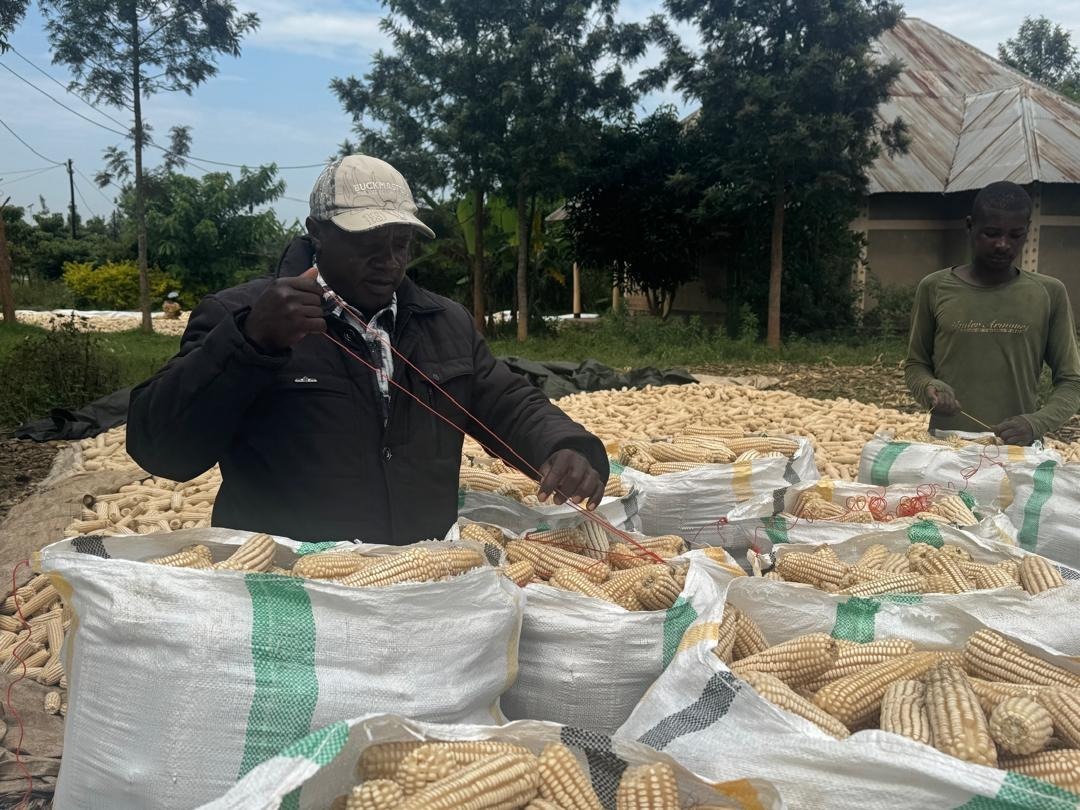
TWAGIRAMUNGU Leonidas crouches beside a large sack of maize, carefully tying it closed as he waits for Africa Improved Foods to collect the harvest at Kaboku Cooperative in Nyagatare District, in the Eastern Province of Rwanda. The golden cobs peek out from the top, ready for transport, a sharp contrast to the painful memories of his past losses. “I once had to feed four tons of maize to my cows because no one would buy it. The quality was so poor,” he recalls quietly. “It was heartbreaking, but it also taught me that things had to change.”
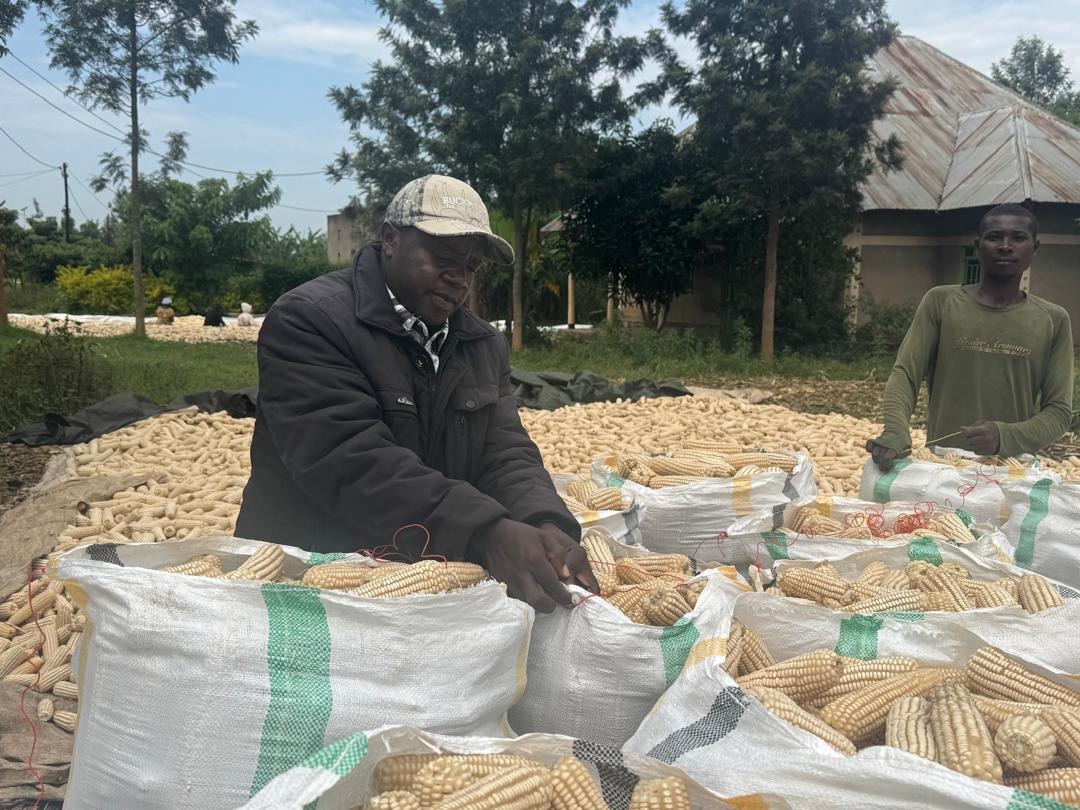
TWAGIRAMUNGU Leonidas closing one of many maize sacs, waiting for AIF collection.
Back then, maize meant uncertainty. Farmers harvested on bare soil. Grain dried slowly in the open air or inside homes. Mold and aflatoxin contamination were common. Processors rejected large volumes, and buyers offered very low prices if they came at all. Across the country, poor post-harvest handling meant maize often failed to meet safety standards. Large quantities estimated at up to 40,000 metric tons per year were rejected due to aflatoxin risks, costing farmers millions in lost revenue. Even processors had to rely heavily on imports from Zambia and the United States because local maize did not meet quality thresholds.
“We had fertile land,” Leonidas says, “but our maize was not market-ready. Sometimes we even saw maize being imported while ours could not be sold. That was painful.”
From struggle to structure.
Before the SDGP project, Leonidas harvested about 2.5 tons per hectare and even that was difficult to sell safely. “I felt powerless. You work hard all season, then the maize spoils or buyers delay payment. Sometimes traders cheated us because we needed cash urgently.”Change began when cooperatives received capacity-building support through the SDGP program, implemented with support from Agriterra and funded by RVO. Training focused on governance, cooperative management, compost making, post-harvest handling, and aflatoxin prevention.
Ngabirano Wilberforce, president of Kaboku Cooperative in Nyagatare
district, says the difference started with mindset and discipline.
“Before the project, yields were low and quality was poor. Now every farmer
has a compost pit near the field. We were trained in careful harvesting, proper
handling, and aflatoxin prevention. We also have full-time agronomists guiding
planting time, fertilizer use, and harvest supervision.”The cooperative now counts 1,087 members (721 men and 336 women) farming
about 900 hectares, with additional land under cooperative infrastructure
projects.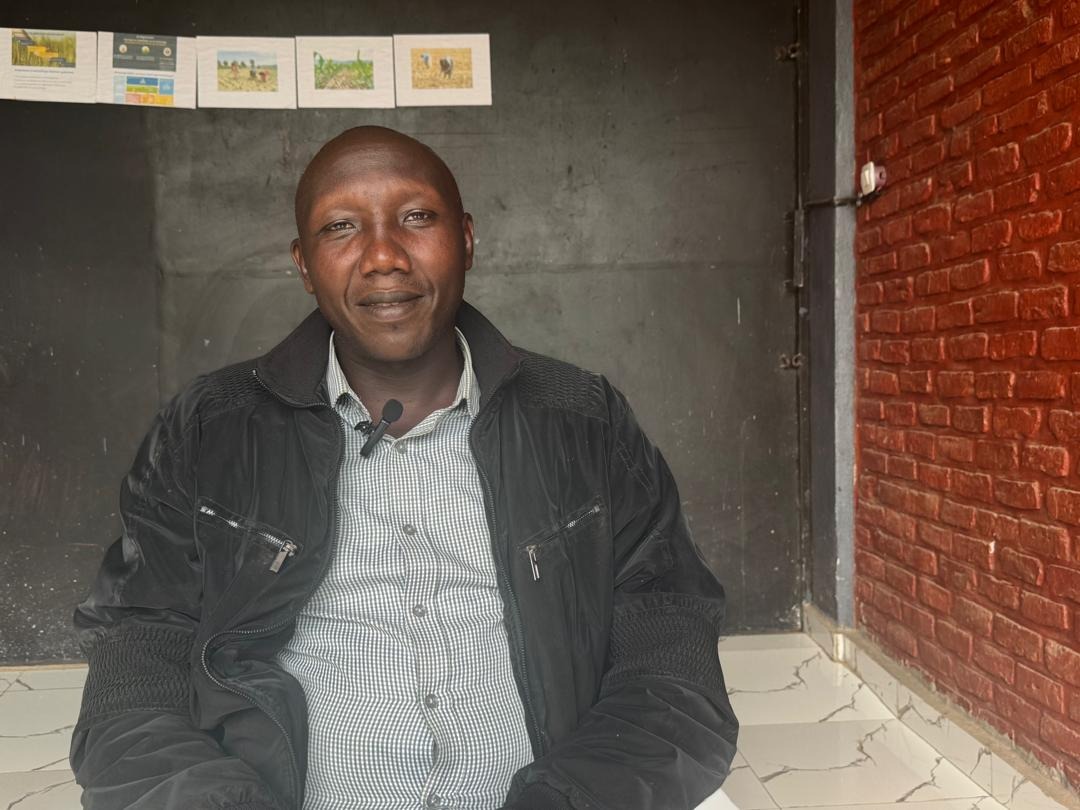
Ngabirano Wilberforce, president of Kaboku cooperative in Nyagatare District.
Harvest changed starting from the ground
Support also addressed simple but critical field practices.
“During harvest, Agriterra helped us with tents so maize would not lie on bare soil,” Leonidas explains. “Before, we harvested directly on the ground. That alone affected quality.”Training plus improved seed and better field management produced dramatic yield gains. Leonidas’s production jumped from 2.5 tons to about 10 tons per hectare.“I couldn’t believe it. I laughed and cried in the field,” he says. “For the first time, I saw what my land could really produce.”
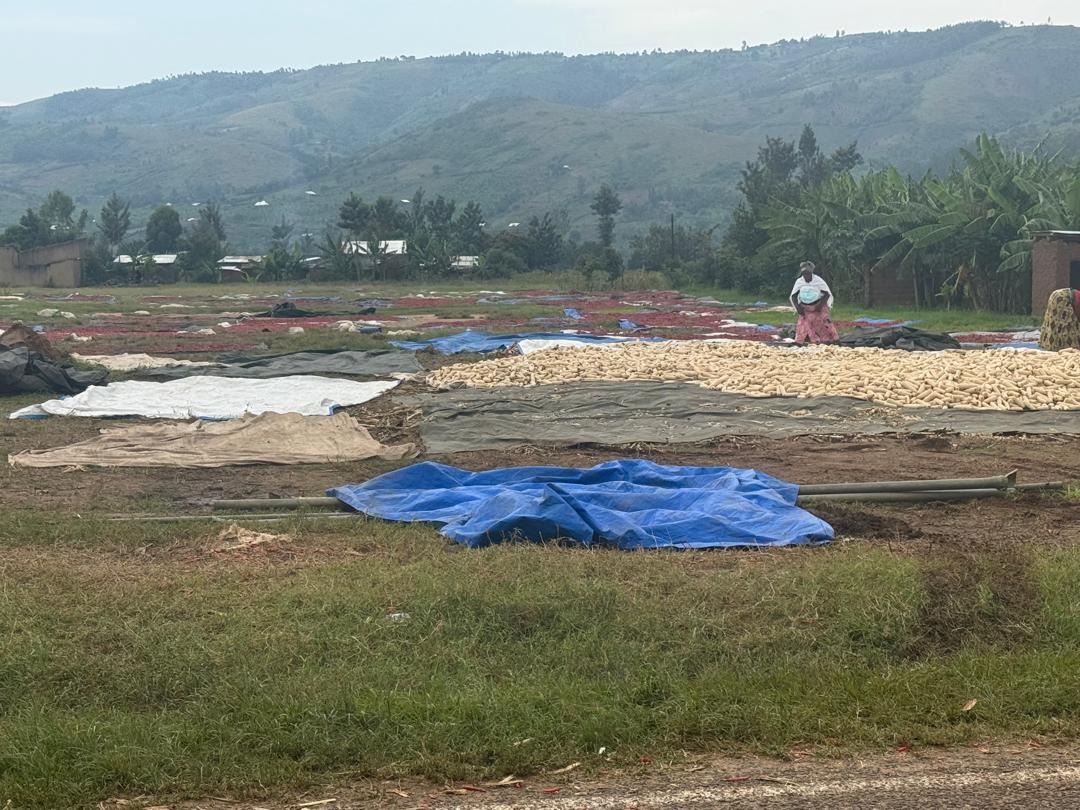
With tents provided by Agriterra, farmers keep maize off the ground, protecting it from spoilage and improving quality.
The cob model: From harvest to cash in days
The biggest shift came with the introduction of the cob model by Africa Improved Foods under the SDGP program.
Under this system:
• Farmers sell maize on the cob immediately after harvest
“After harvest, AIF immediately came to buy our maize on the cob,” Leonidas
says. “Before, we had to dry and shell it ourselves. It took a long time. Now,
within five days, we receive our money.”
He adds that prices improved too.
“Previously, traders offered very low prices. Now the price is higher — about
120 Rwf more per kilo than the general market. And all our maize is accepted. I
even know how to test for aflatoxin myself.”
Wilberforce calls the cob model transformative.
“It brings maize to market quickly, with minimal expense, and protects it from aflatoxin. This model is now deeply rooted and hard to replace.”
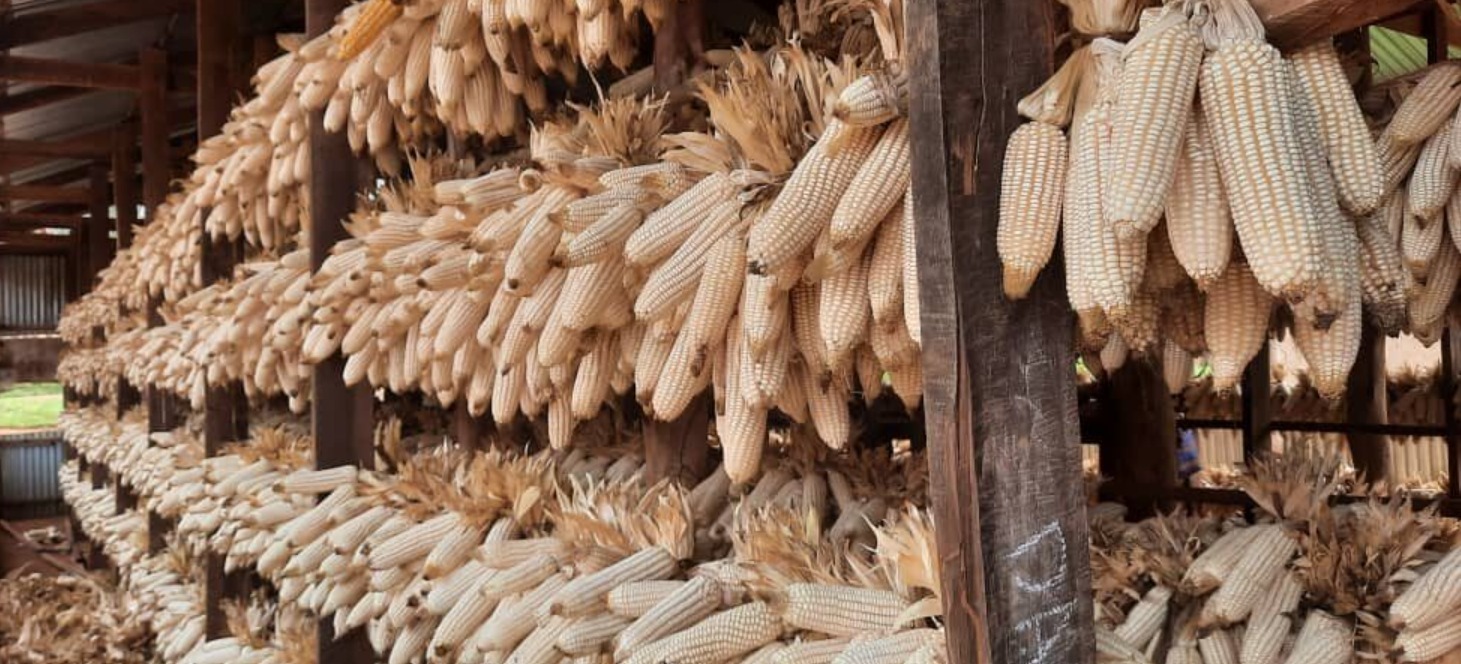
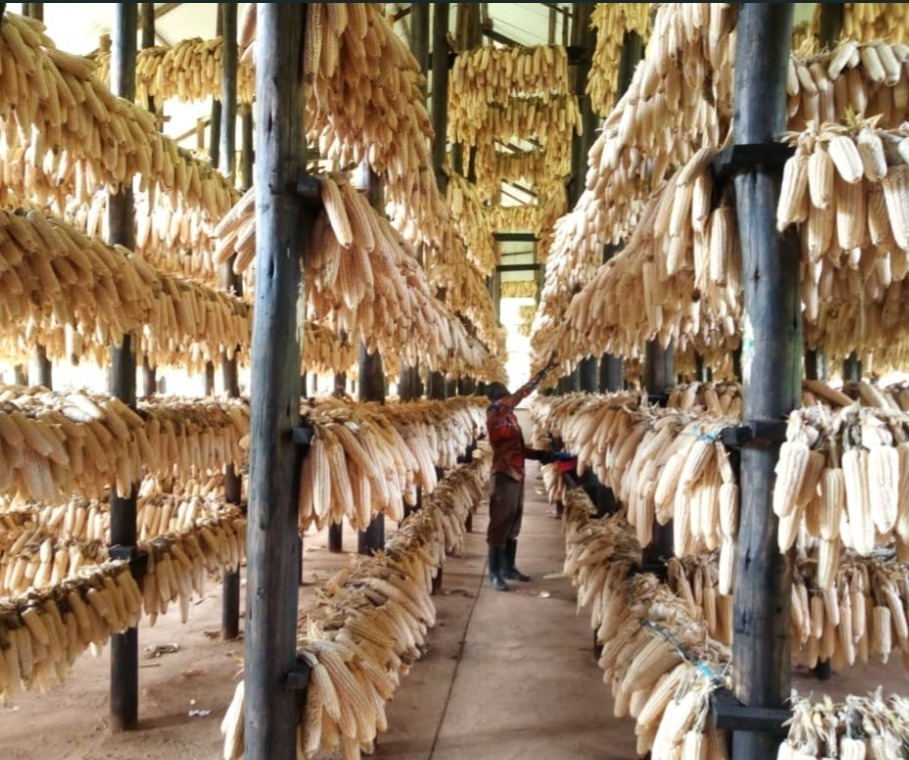
Maize cobs stacked in the hub, ready for Africa Improved foods to collect them for drying, a new system that protects quality from the start.
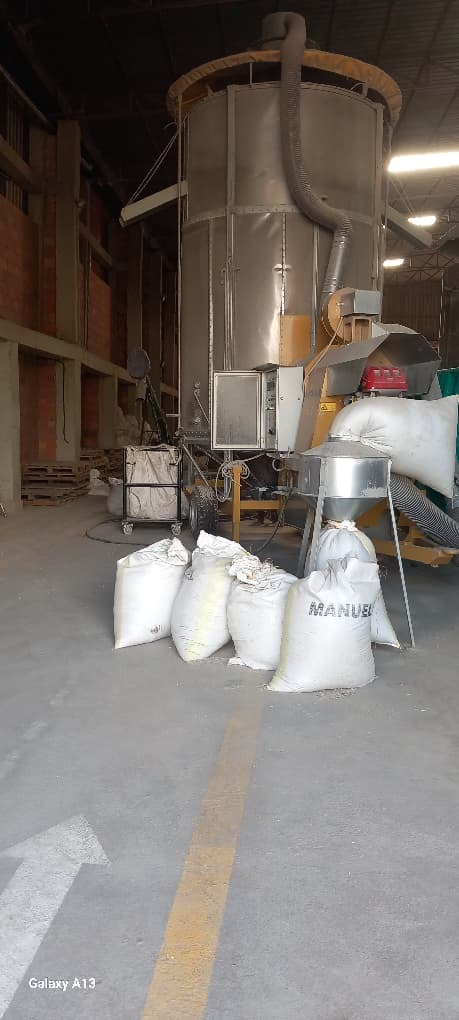
Drying machine: Turning harvest maize cobs into dried, safe maize.
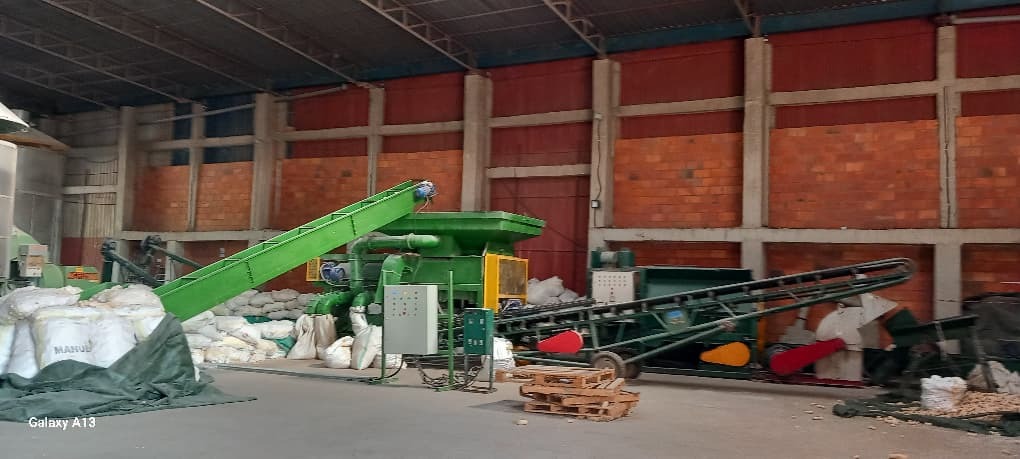
Maize Sheller machine removing maize kernels from dried cobs.
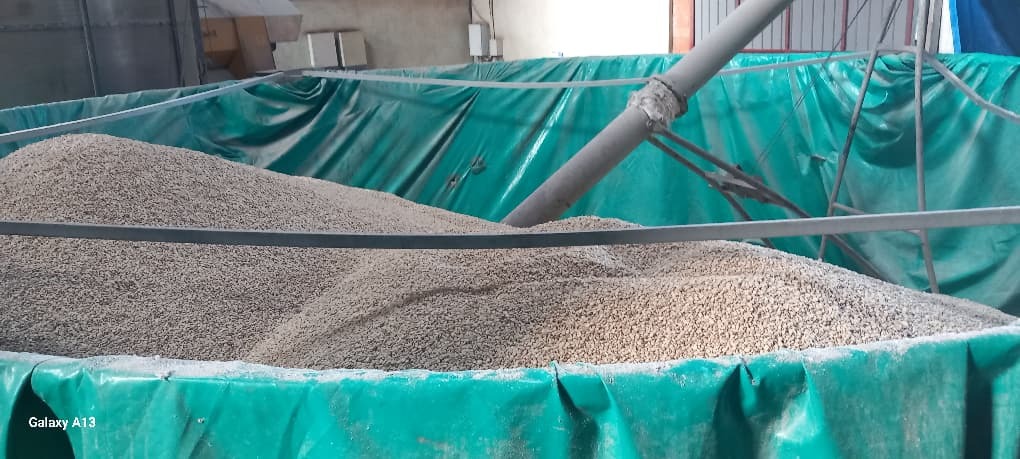
Dried Maize kernels ready to be used.
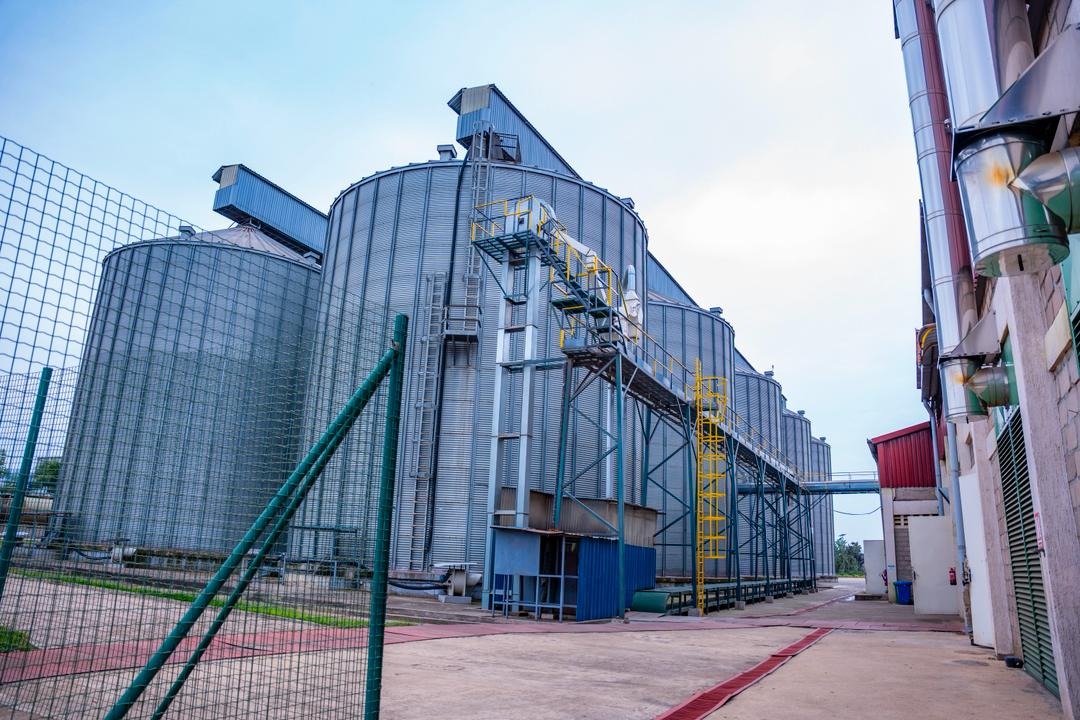 Modern Silos, storing maize grain and protecting them from spoilage while waiting to be used.
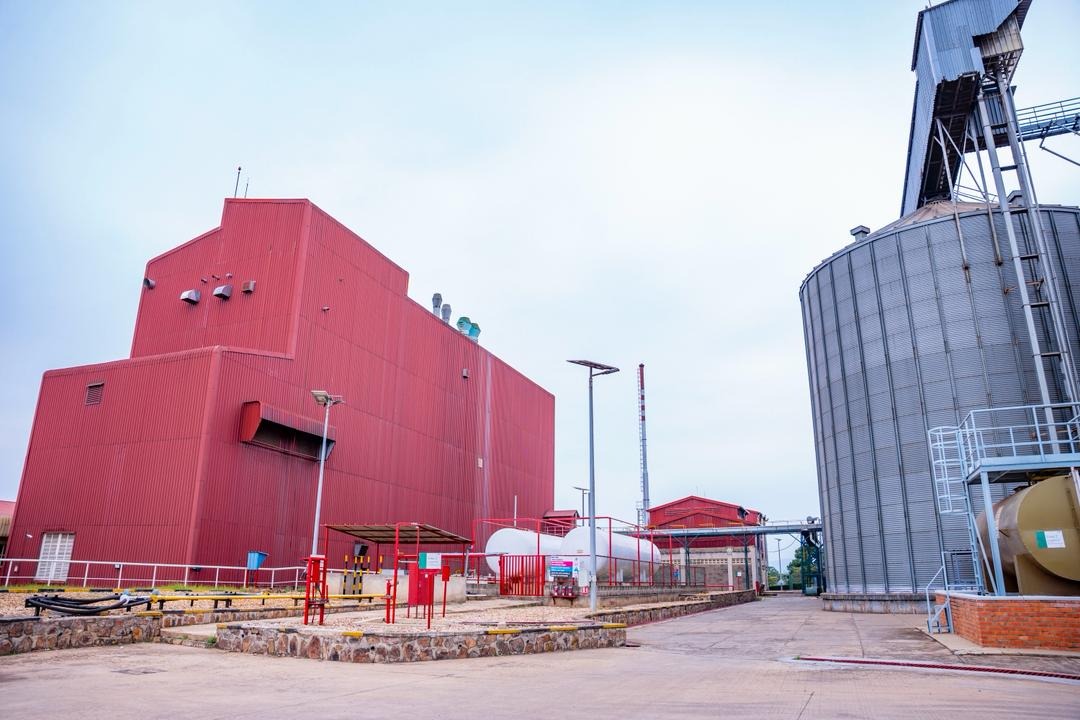
AIF’s Maize grain milling plant, where local harvests are into fortified flour.
Infrastructure unlocked the bottleneck
Rajesh Singh, Procurement & Sustainability Director at Africa Improved Foods, says infrastructure was the missing link.
“The biggest positive outcome of SDGP was the introduction of the cob model , together with shellers, dryers, silos, and warehouses. Earlier, buying capacity was only about 40–45 thousand metric tons per month, while harvest volumes came in large waves. There was no proper drying and storage infrastructure.”Previously, the journey from harvest to sale could take 30–35 days. Maize often stayed in villages in plastic bags or houses, absorbing moisture and developing mold. “Now,” he explains, “farmers dry cobs for 3–4 days, sell, and receive payment within 3–7 days. The full harvest-to-cash cycle is about 10 days in some cases as little as six. That removed the main bottleneck.” National drying, shelling, and storage capacity expanded from roughly 15–20 thousand metric tons per month to about 60–80 thousand during peak season.
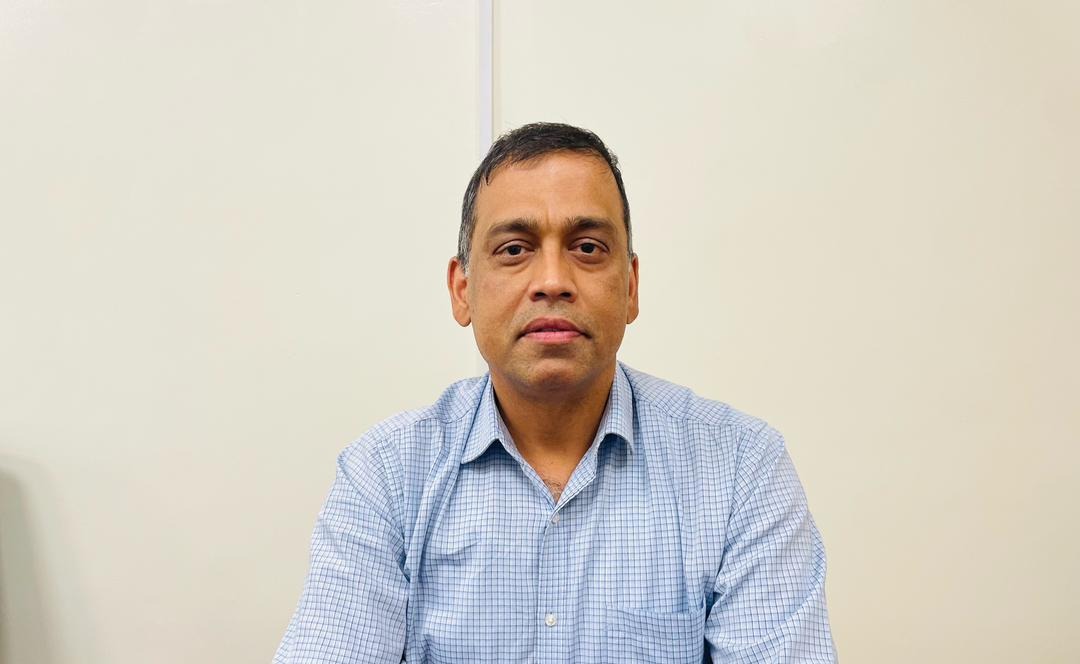
Rajesh Singh, Procurement & Sustainability Director at Africa Improved Foods.
Quality, safety, and local sourcing
Before the intervention, processors frequently rejected local maize due to aflatoxin contamination, a serious food safety hazard. Now, cooperative systems, agronomist supervision, drying sheds, and testing help maize meet strict standards including aflatoxin levels below 5 ppb for procurement.This has reduced import dependence, lowered costs, and improved food safety for fortified products such as child and maternal nutrition foods. Supply chain time dropped from 6–10 weeks to under a week, while post-harvest losses fell by 15–22%.
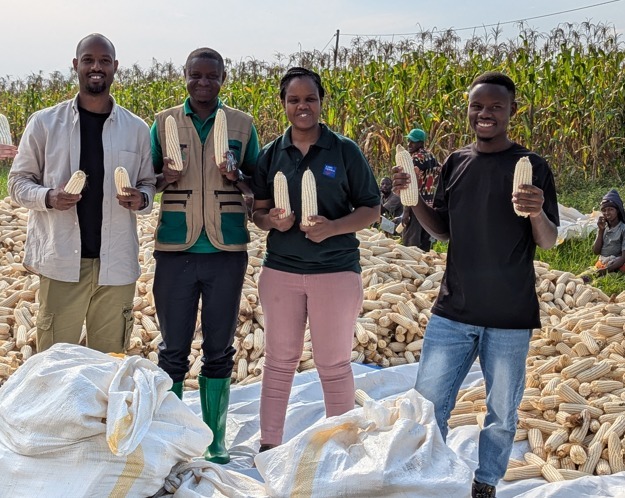
AIF, Agriterra and Cooperative members celebrating improved yields.
A different life at home
For Leonidas, the impact is visible far beyond the warehouse. “I have progressed a lot. I didn’t have a proper house before , now I’ve built a good one. This season’s harvest helped me acquire two more hectares of land.”
“We no longer search for buyers,” Leonidas says with a smile. “They come to
us.”
SDGP by the numbers
From uncertainty to resilience
What changed is not only maize handling , but farmer confidence and market trust. With structured cooperatives, technical training, drying infrastructure, and reliable buyers, risk has dropped and motivation has risen. “The SDGP project truly changed our lives,” Leonidas says. “They help us grow quality maize, and it is bought promptly. Before, maize sometimes rotted in piles. Now everything runs smoothly.” Rwanda’s maize story is no longer about missed markets and rejected harvests. It is about systems that work and farmers like Leonidas who now harvest with certainty instead of fear.
Leave a Comment